
The Making of the Record
Kip’s new release (“Ode to the Road: From Huntington to Hi Records”) is on streaming platforms everywhere now, with vinyl expected in mid-November 2026. Read more about the release here.
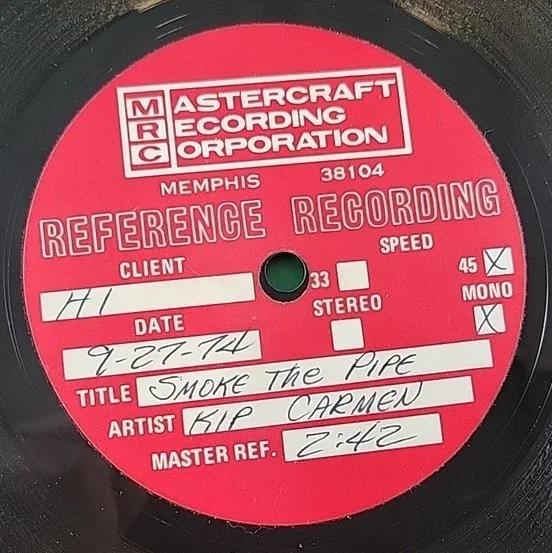
Original lacquer of “Smoke the Pipe” cut by Hi Records in 1974.
About one year before this record was ready for release, the tapes containing most of the songs were thought to be lost forever. Indeed, a few of them, like "Smoke the Pipe," "Ode to the Road," and "I Want to Be a Good Man," had not been heard by human ears for over forty years.
The first sign that the universe had plans for this music came one day in the Spring of 2025 when, miraculously, one of the handful of 10-inch lacquers of "Smoke the Pipe" cut by Hi Records in 1974 appeared on eBay. Thankfully, we were able to acquire it and finally hear the recording Kip had talked about for so long.
This discovery prompted discussions with Fat Possum Records (the current administrator of the Hi Records catalog) and a search commenced through their archives. Eventually they were able to locate the original 2-inch 16-track tape from Kips' 1974 sessions at Royal Studios, featuring the full arrangements of "Smoke the Pipe," "Ode to the Road," "Macon Woman Blues," and "I Must Be Losin' You."
The story of the tape from Kip's 1977 Royal sessions is even more improbable. This tape, which included the songs "I Want to Be a Good Man," "Stampede," "What a Woman," and "I Really Don't Know What Love Is," had been stored at Kip's childhood home in Huntington, New York since the late 70s, where Kip maintained a work space for many years. But the house had been uninhabited and in a rapidly deteriorating state for nearly two decades.
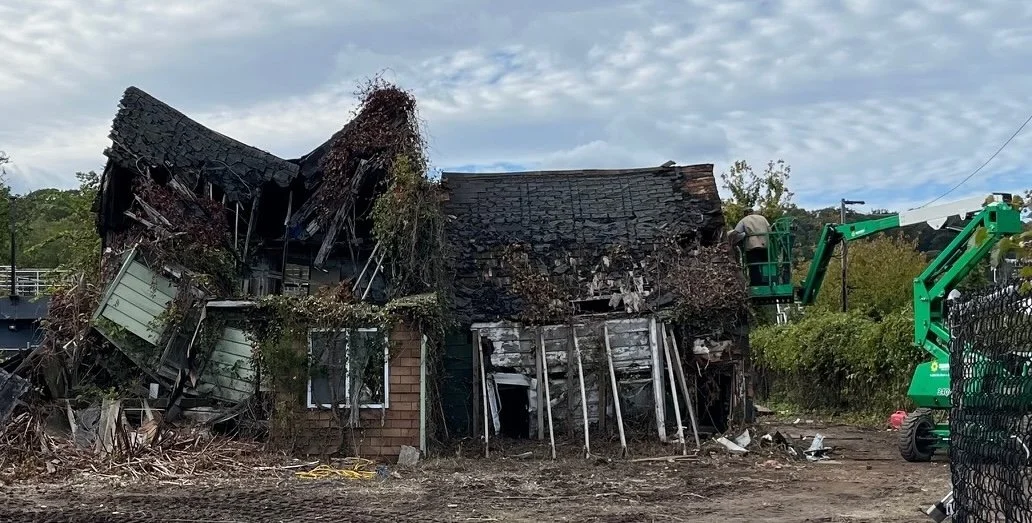
"The Crippen House" in October 2025, days before Kip’s tapes were recovered.
Historians working for the Town of Huntington took an interest in the property, which housed one of the country's oldest grist mills and was purchased by Kip's ancestor Peter Crippen in 1864, making him one of Huntington's first black property owners.
After many years of legal wrangling and red tape, the Town of Huntington finalized its acquisition in 2019, and in October 2025 commenced deconstruction of the house to carefully remove and preserve the historic elements from the site.
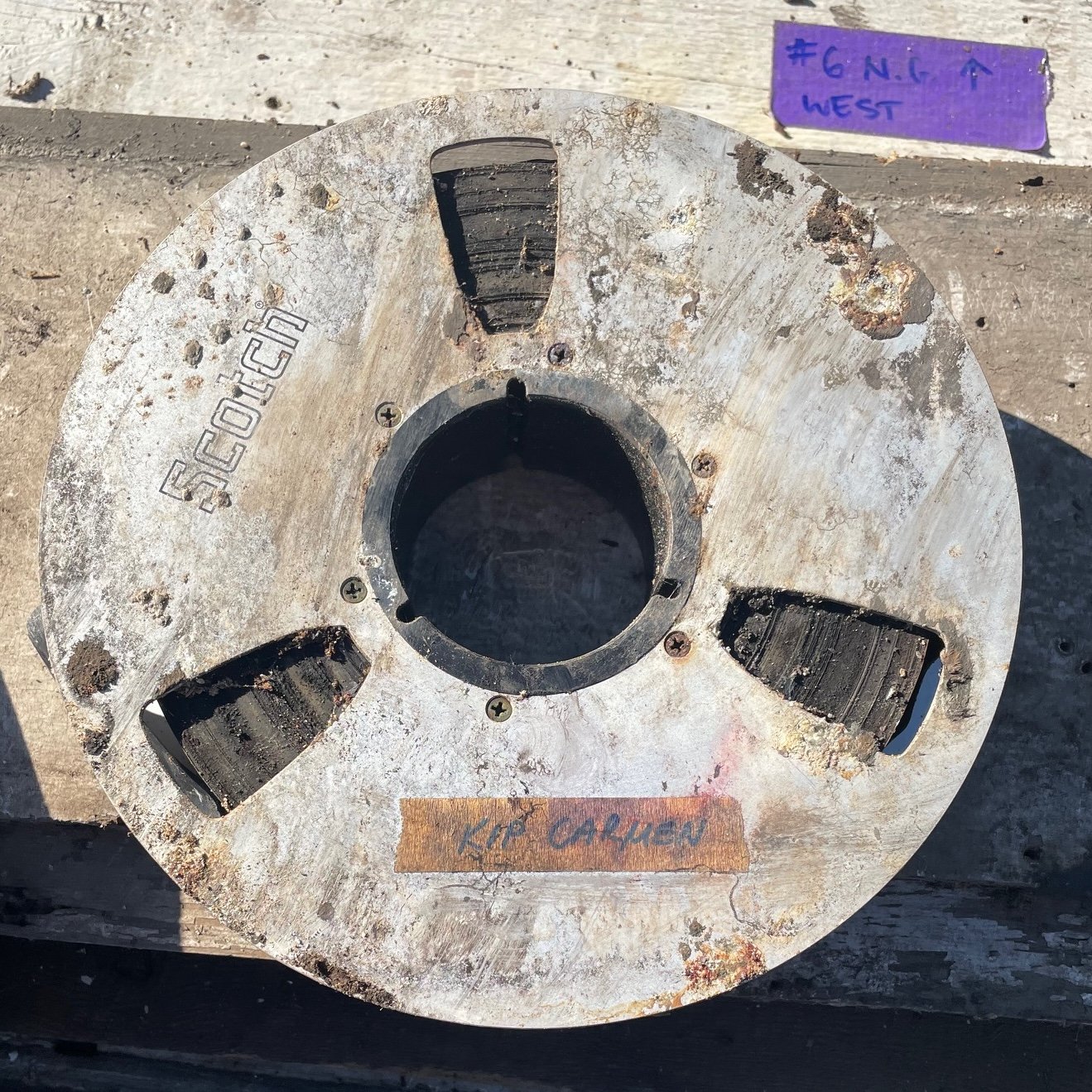
The 2-inch multitrack tape from Kip’s 1977 sessions at Royal Studios.
Thanks in large part to the invaluable cooperation attention of the Huntington African American Museum, the 2-inch 16-track that Bill Cantrell gave to Kip in 1977 was dug out of the ruins just before the house was torn down.
This tape required major restoration work by Catherine Vericolli at Central Audio Archiving in Nashville, involving multiple 15-hour baking and cooling sessions, hand cleaning, and numerous low-speed passes on a tape machine used for "head cleaning."
After finishing the remediation process, Catherine ran both 2-inch tapes on a Studer A-827 to make 24-bit / 96kHz digital copies using Burl Audio BAD4 analog-to-digital (ADC) converters.
Catherine also transferred the quarter-track 7.5 IPS tape containing Kip's Royal Studios demo on an Ampex ATR-104 using a Rupert Neve Designs MBC dual path ADC at 24-bit / 96kHz.
Given the condition of the tapes, all-analog process was not feasible and would not have produced the best sonic results. The multitrack recordings needed to be mixed, and that work needed substantial time as well as some digital tools to clean up spots where the tape suffered from age or damage.
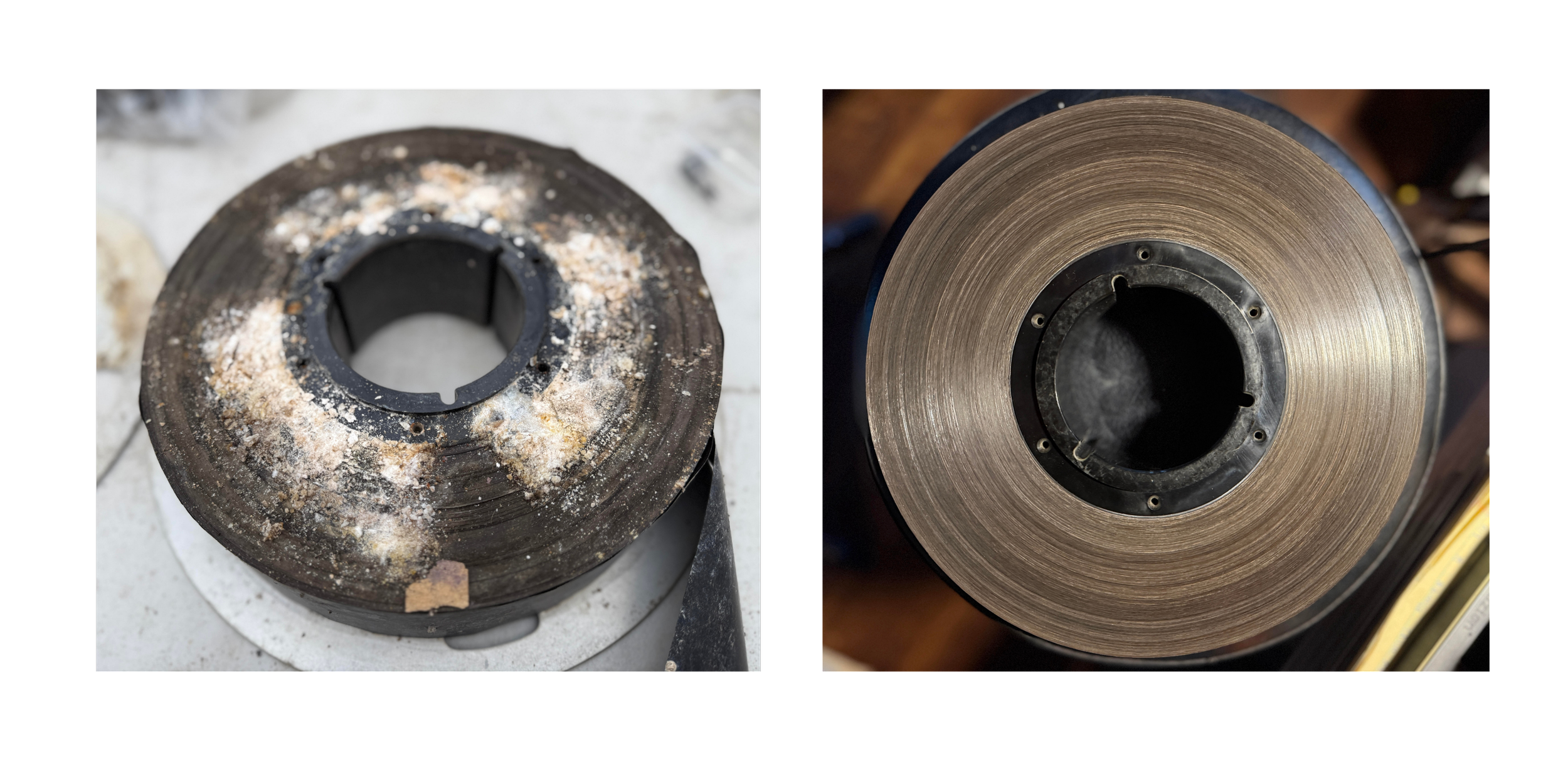
The 1977 tape before and after remediation.
Using the 24-bit / 96kHz digital transfers of each song's 16 tracks from the original sessions, I mixed the recordings with Kips' participation and input over a 6-week period from May to June 2026, using Logic Pro and various Slate Digital plugins. We approached mixing with the goal of making the songs sound authentic to the time and as good as they would have sounded if they were released in the 70s. Digital reverb and compression were used as sparingly as possible.
Nick Townsend at Townsend Mastering in Los Angeles mastered the record and cut the lacquers from the 24-bit / 96kHz digital mixes. The vinyl was plated and pressed by Furnace Record Pressing in Alexandria, Virginia.
In addition to reliving fond memories from his sessions at Royal, this experience provided Kip an opportunity to revisit mixes from his "Just For Tonight" album that never quite met his satisfaction. At the time, Kip was focused on making a living as a bandleader and needed the album to be done quickly os that eh would have something to show for his body of work and the young musicians in his band could se their name in the credits of a record. He didn't have the luxury of closely supervising the process back then, and didn't love the excessive reverb and clutter in the original mixes. "It was all too busy, it was just too much," Kip says of the original mixes of "Stampede," "What a Woman," and "I Really Don't Know What Love Is."
With this album, we wanted to strip the songs back to their essence, with a focus on the Royal Studios Hammond B-3 organ heard on so many Hi Records classics. We were guided by the approach Kip learned at Royal. "You start simple," Kip said, "I remember being at Hi Records and talking with Bill Cantrell. It was al about the simplicity."
-- Ben Takis (@xentakis)
Manager of Carsongs Music, LLC and stepson of Kip Carmen. August 2026.
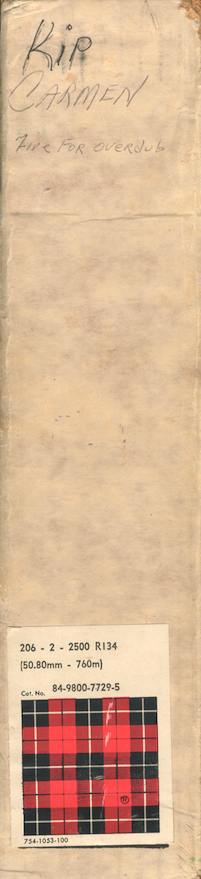
The box for the 2-inch multitrack tape from Kip’s Royal Studios sessions in 1974.